
Research & Ethical Learning Facility
Responsible learning with animal welfare at its core.
The GCTS Animal House supports pharmacy education through dedicated animal-care spaces, practical learning and an emphasis on ethical treatment in biomedical and pharmaceutical study.
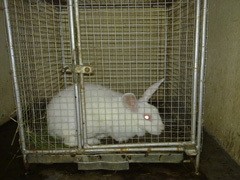
Facility overview
Planned spaces for animal care and academic work.
The Animal House information published by GCTS describes separate housing areas along with dedicated support spaces for day-to-day care and practical learning.
Supporting spaces
Designed for orderly care, handling and maintenance.
Alongside species-specific rooms, GCTS publishes supporting areas that help organise animal care and facility operations.
WA
Working Area
A dedicated working area supports handling, observation and practical activities associated with the Animal House.
ST
Store Room
Storage space is identified for supplies and materials needed for organised facility operations.
WS
Wash Area
A separate wash area supports routine cleaning and hygiene requirements within the facility.
UG
Undergraduate Learning
The published GCTS page describes the Animal House as a learning resource for undergraduate pharmacy students.
PG
Postgraduate Learning
The facility is also identified as a resource for postgraduate students in pharmaceutical education.
ET
Ethical Treatment
GCTS states that students learn the ethical treatment of animals as part of their academic exposure.
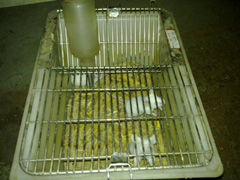
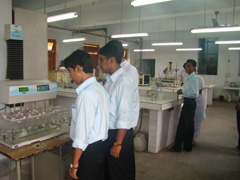
Academic purpose
Connecting responsible practice with pharmaceutical education.
Good animal-care practice, controlled study conditions and ethical awareness are important parts of biomedical and pharmaceutical learning.
01
Observation & practical learning
The facility supports guided academic exposure to animal-related biomedical and pharmaceutical study.
02
Animal welfare awareness
Students are introduced to the importance of humane and ethical treatment in scientific work.
03
Structured facility management
Separate animal rooms and supporting work, storage and wash areas help maintain an organised environment.
04
Links with laboratory learning
The Animal House forms part of the wider practical-learning infrastructure published by GCTS.
Ethics & welfare
Animal welfare is an essential part of responsible research.
Current Government of India rules require registered establishments conducting animal experiments to work within the CCSEA framework and through Institutional Animal Ethics Committees (IAECs).
Ethical review, humane care and minimising unnecessary suffering.
The current Committee for Control and Supervision of Experiments on Animals (CCSEA) framework is intended to ensure that animals are not subjected to unnecessary pain or suffering before, during or after experiments. The published GCTS Animal House page also emphasises ethical treatment as part of student learning.
Animal welfare
Ethical learning
IAEC framework
Humane care
Responsible research
Explore more
Continue through GCTS practical-learning resources.
Explore laboratories, equipment, faculty expertise and research-related facilities across the College.